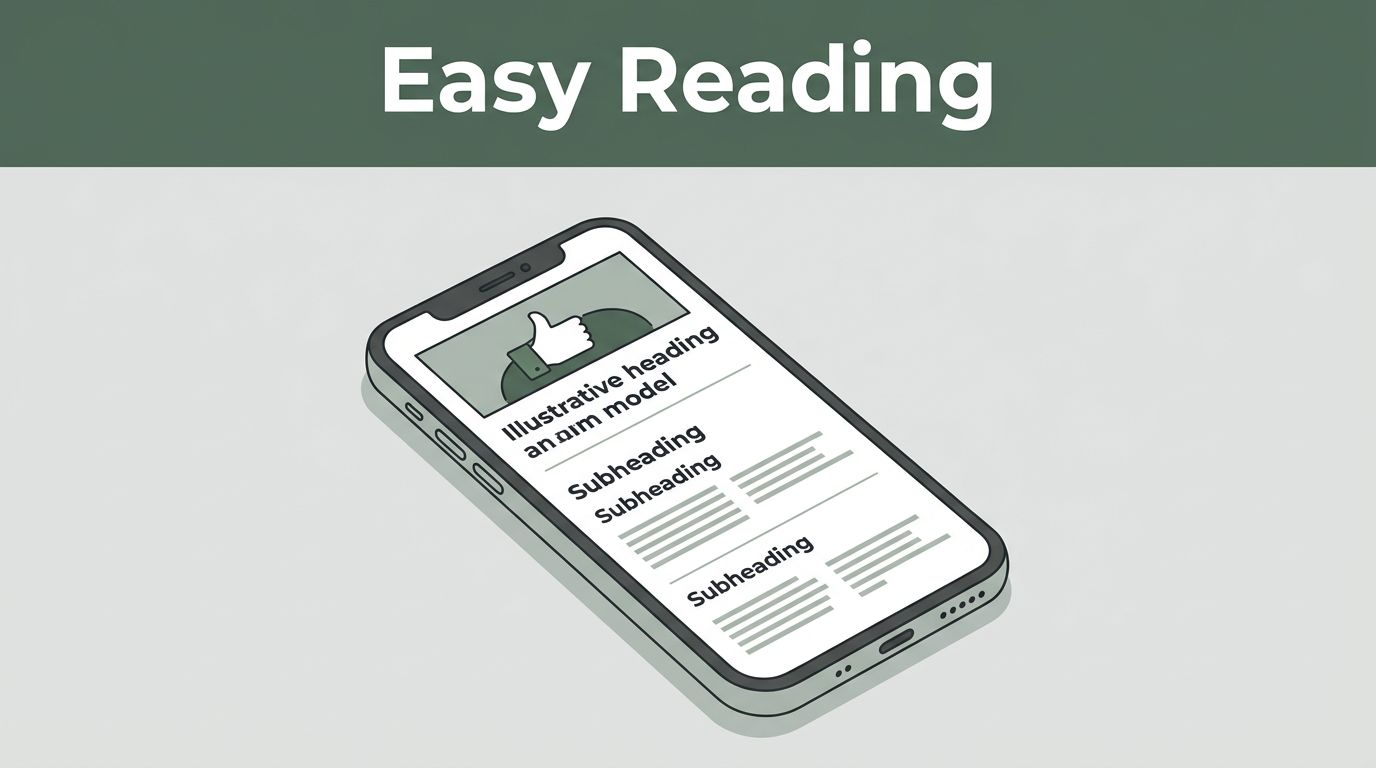
You grab your phone during lunch. You scroll a blog post. Three seconds in, dense text hits you. You bounce.
Most readers do the same. Blogs see 70-90% bounce rates because folks skim fast on mobile, which drives 62-63% of traffic. Good structure changes that. It turns skimmers into fans who stay longer and share.
Here are the five steps we’ll cover:
- Hook with a TL;DR upfront.
- Craft headings that guide eyes.
- Use short, scannable body text.
- Add visuals and space.
- Polish for readability scores.
These tweaks boost engagement and SEO, especially as AI scans top content for 2026 featured snippets. Let’s dive in.
Why Great Article Structure Hooks Readers and Helps SEO
Readers skim about 20% of text. They scan in F-patterns, fixing on headings and bold bits first. Poor structure spikes bounces to 90% on blogs. Strong builds keep folks longer.
Dwell time matters too. Google uses it as a rank signal. Short stays under two minutes hurt positions. Easy formats cut bounces, raise time on page, and spark shares. That builds backlinks naturally.
Structured posts match search intent better. AI pulls snippets from clear lists and headings. Blogs with scannable text win despite high bounces. Check Nielsen Norman Group’s eyetracking study for proof on scanning habits.
Cut Bounce Rates with Instant Value Up Front
Put value first. TL;DR summaries hold 70% more readers past the opener. Mobile users quit after 2-3 minutes otherwise.
Slow loads worsen it. Every 10 seconds delay boosts bounces 123%. Clear flow gives quick wins. Readers stay because they see payoff right away.
Test on phone. Thumb scrolls favor bold openers over walls of gray.
Boost Engagement for Shares and Backlinks
Easy reads spark comments and shares. Formatted posts get twice the interaction, per blogging stats.
Social algorithms love it. Higher engagement means more reach. Natural links follow from fans who quote your tips.
Backlinko reports blogs thrive on this. See their 2026 blogging statistics for details on content wins.
Start Strong with a TL;DR and Compelling Hook
Busy readers want the point fast. Place a hook and bullets right after your title. AI reads the first 540 words for snippets anyway.
Start with a question or stat. Follow with 3-5 bullets on takeaways. This answers “What’s in it for me?” upfront.
For this post, imagine: Hook on mobile bounces, then bullets on the five steps. Readers nod and keep going.
Grab Attention in the First Sentence
Make it punchy. Under 20 words. Try a fact: “90% of blog readers bounce fast.”
Or a question: “Tired of losing readers in seconds?” Bold promises work too: “Double your dwell time today.”
Test variations. Pick what fits your voice. Readers lock in or leave here.
Deliver a TL;DR That Answers ‘What’s in It for Me?’
Bullet key wins. Use action words like “cut,” “boost,” “add.”
Example:
- Cut bounces with short paras.
- Boost SEO via headings.
- Engage with lists and images.
This front-loads value. Google snippets love it. Readers skim, grasp, and dive deeper.
Design Headings That Pull Readers Through Your Post
Headings act as signposts. H1 poses the main question, like a search query. H2s promise benefits. H3s unpack details.
Use sentence case. It feels friendly. Limit H2s to 4-6. Each pulls to the next.
High-traffic sites do this. Headings build topic clusters for Google. They guide skimmers seamlessly.
Make H2s Questions Readers Already Ask
Phrase as reader queries. “How Do Short Paragraphs Boost Reads?” Keywords slip in naturally.
This matches intent. Readers click and stay. Limit per post to avoid overwhelm.
Scan top results. They use this style often.
Layer H3s to Break Down Complex Ideas
One idea per H3. Follow with 2-4 short sentences. No H4s needed.
It chunks info. Readers process fast. Flow stays tight.
Add a Table of Contents for Easy Navigation
Link H2s and H3s. Place after intro for long posts. It jumps users around.
This lifts time on page. UX signals help rankings. Tools auto-generate it easy.
Format Body Text for Lightning-Fast Skimming
Short paras rule. Aim for 2-4 sentences. One idea each. White space breathes.
Lists highlight tips. Images every 300 words break gray. Alt text adds SEO.
Mobile first. Test on small screens. Thumbs demand speed.
Master the Art of Short, Punchy Paragraphs
Cap at three lines on desktop. It cuts clutter. Airy text invites scrolls.
Long blocks overwhelm. Readers flee. Short ones hold attention.
Vary lengths slightly. Most stay snappy.
Use Lists to Make Tips Pop and Stick
Reserve for steps or benefits. Bullets suit pros and cons. Numbers for sequences.
Example benefits:
- Faster reads.
- Higher shares.
- Better ranks.
Prose handles most else. Don’t overdo lists.
Drop in Visuals to Break Up Text Walls
Place after key points. Use free stock or charts. Compress for quick loads.
They halt scrolls. Eyes rest. Pair with captions for context.
Polish for Top Readability Scores and SEO Power
Aim for 8th-grade level. Tools like Yoast flag issues. Hit green lights.
Keywords go in first 100 words, headings. Internal links tie posts. Author bios build trust.
Update old content. Quick structure tweaks revive traffic.
Check Readability with Free Tools
Paste text in Hemingway or Readable. Shorten long sentences. Swap passive for active.
Yoast scans live. See their readability features for tips. Aim Flesch 60-70.
Steps: Write draft. Run check. Fix reds. Repeat.
Weave SEO Naturally Without Stuffing
Primary keyword in H1, H2s. Variants scatter. Link to your posts.
It builds authority. No force. Readers come first.
Structure aids this base.
Readers stick when structure shines. Recap the five: strong openers, smart headings, scannable text, visuals with space, readability polish.
Audit one post today. Tweak and track bounces. Share results below.
Subscribe for more. Download our checklist to start. Simple changes transform traffic fast.